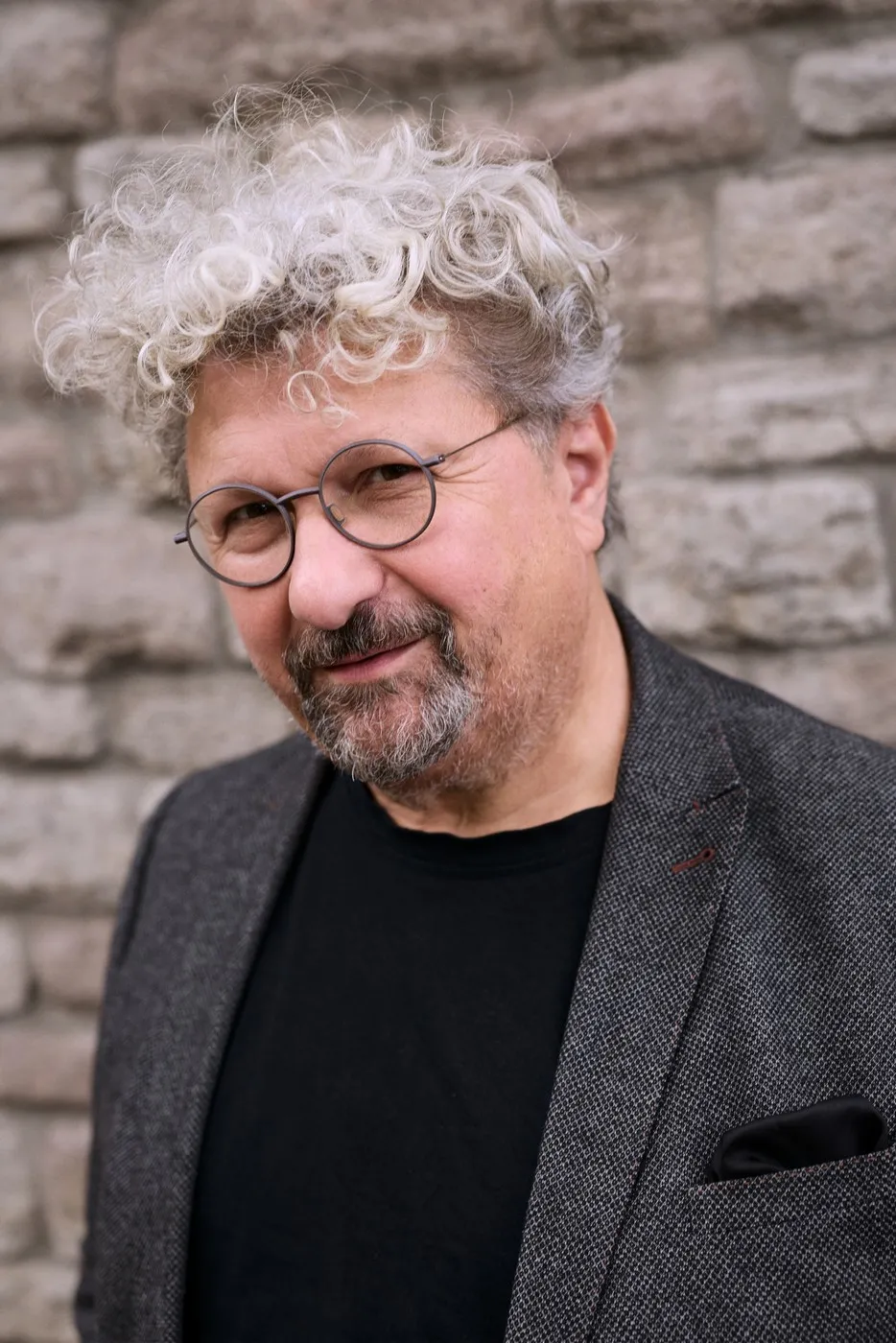
The Man of a Thousand Trades
Aykut Kayacık came to acting through a misunderstanding. He wanted to become an architect, walked into a theater workshop out of curiosity, and walked out with an engagement at the Schauburg in Munich. He never finished the degree. He kept building anyway — just sentences, characters, and occasionally entire companies.
Back in Berlin he founded his own theater group and called it “Tausend und eine Ausnahme” — a thousand and one exceptions. He took lessons in acting, voice, and singing, shot his first short film in 1996 with Joachim Król — it screened at more than fifty festivals — and followed it with seven more. In 1997 he stood on stage for Thomas Ostermeier at the Baracke of the Deutsches Theater. Nobody had discovered him. He had dropped himself off.
What came after is called a filmography in Germany and a life's work anywhere else. Caretakers, doctors, mayors, detectives. The grown-up Veli in “Almanya”, a court official of the Shah in “The Physician”, one of the leads in Doris Dörrie's first television series. Plus a specialty of his own — call it the Anatolian one: a dead woman in a cistern in Istanbul, a treasure of Troy, a death in Istanbul. For three decades, German commissioning editors reliably located him east of the Bosporus while he lived in Charlottenburg and spoke Berlin dialect. He took it in stride. McDonald's and Vodafone too, because a man of a thousand trades is not someone who only accepts the beautiful jobs.
In between, things that appear in no actor's résumé. His own production company. The Turkish rights to “Caveman”, which he directed himself while he was at it. And a corporate event for thirteen hundred Mr. Wash employees at the Lichtburg in Essen, on Germany's biggest cinema screen, with his own films and Eko Fresh live. A car-wash workforce, a rapper from Mönchengladbach, and a man who had originally wanted to study structural engineering. It worked.
In 2008, the Golden Boll for Best Actor. Eighteen years later, the newcomer award of the German TV Crime Festival for the series concept “Wölfe”, now in development with Frankfurt's U5. A newcomer, at 63. Sometimes the business recognizes youth where others see only professional experience.
These days he writes more than he acts, and still acts plenty. “Wer schießt auf Frau Hummel?”, written with Saskia Vester and performed with her, ran at the Komödie im Bayerischen Hof until March 2026. “Schön war's” went to the Kleist Prize for emerging playwrights, “Tanzstunde mit Tiger” is out with the theaters, “Neulich beim Griechen” is finished, and the revue “Im Rausch des Rosenöls” was completed just in time for lockdown — call it bad luck, or the best timing of his career.
He was born, by the way, in Akhisar, a small Turkish town famous for its köfte. Among the town's sons and daughters he ranks second, behind the arabesque singer Kibariye and ahead of a football referee. Don't rule out the two of them landing a summer hit one day. The same town holds the house locally considered the birthplace of Aristotle Onassis. He has stood in front of it. The Onassis foundation later wanted to buy it; the owner turned down three million euros.
And then there is the novel: “Kevin erbt ein Kamel” — Kevin inherits a camel. Naturally.